

Soy vs Paraffin Candles: A Working Chandler's Honest Comparison (2026)
Burn time, hot throw, soot, cost and the soot-vs-petroleum debate, tested side by side in the Bristol studio. The answer is less obvious than either camp pretends.
Prices updated June 26, 2026
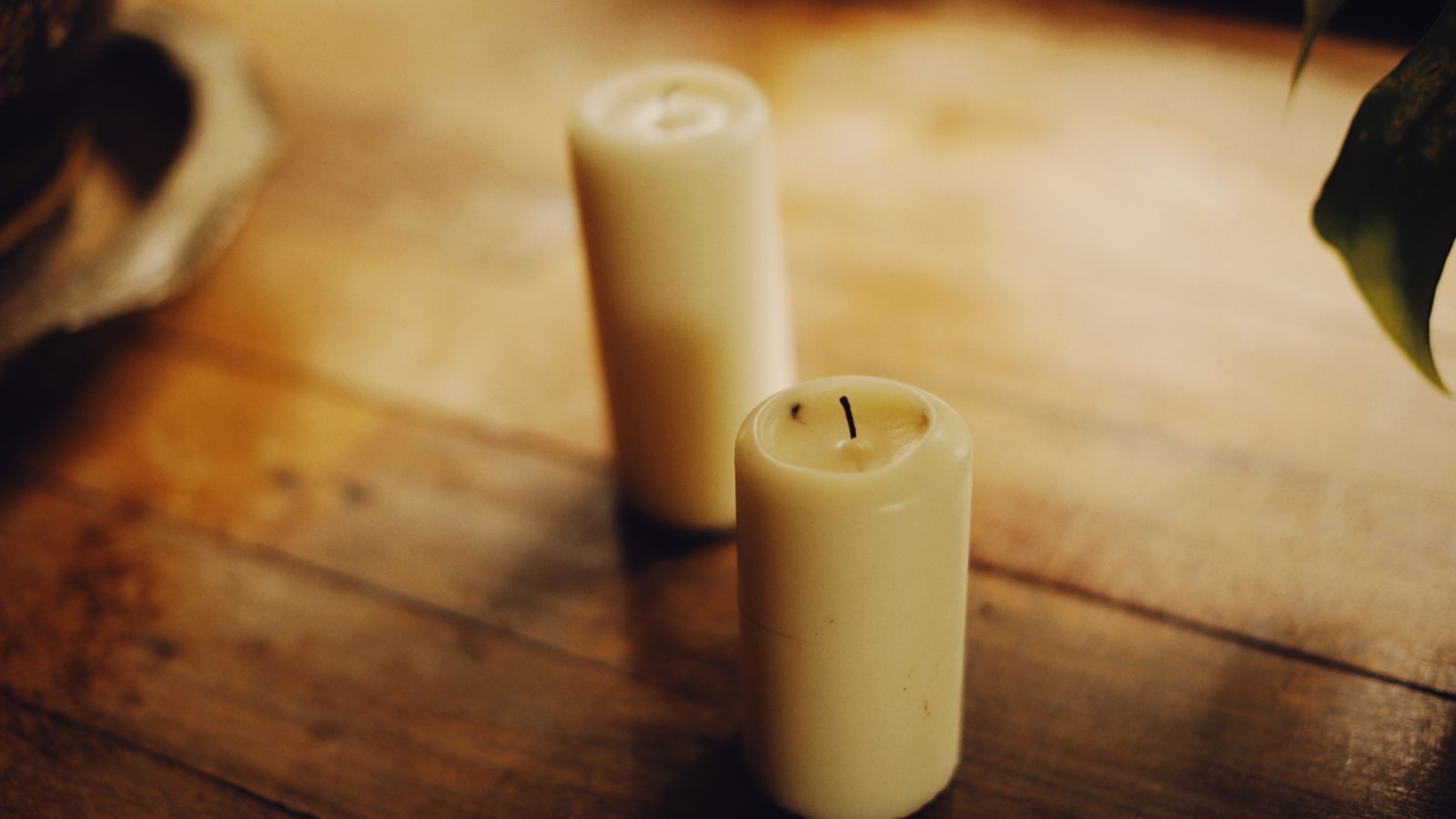
I have heard the soy versus paraffin argument settled on a craft-fair table about three hundred times. If you want the fuller wax roundup afterwards, the best wax for candles guide covers coconut, beeswax, apricot and rapeseed on the same rubric. Half the time soy wins because it is plant-based. The other half paraffin wins because it throws harder. Both camps are partly right, and both are quietly missing the point.
After five years of pouring both waxes for paying customers, here is what actually separates them when you stop arguing on Instagram and start measuring with a thermometer and a stopwatch.
The test setup
Same 200 ml glass vessel. Same fragrance oil at 8% load. Same wick series (CD), sized one larger for the paraffin to match its lower melt-pool temperature. Fourteen-day cure for the soy, 48-hour cure for the paraffin (which is all paraffin needs). Burned in the same room, an hour at a time, with a wax-pool depth gauge and a kitchen scale to track mass loss.
Hot throw
Paraffin wins, clearly. At the same 8% fragrance load it filled a 35 m² (about 375 sq ft) room within twenty minutes; the soy candle filled the same room in forty and never quite reached the same intensity.
This is not opinion. Paraffin's lower melt point and lower viscosity move scented wax to the flame faster, which is what hot throw actually measures. If you want maximum scent per pound of fragrance oil, paraffin is the right tool.
Burn time
Soy wins, but by less than the marketing suggests. The soy candle ran 47 hours; the paraffin candle ran 41 hours from the same fill weight. That is a 15% advantage to soy, not the 2x sometimes claimed.
The gap comes from soy's higher melt point, which means a slightly smaller pool and slightly slower fuel consumption at the same wick size.
Soot and indoor air
This is the most-cited and least-understood comparison. Properly wicked candles, both waxes, burn cleanly. Particulate output is a wick-and-flame-height issue, not a wax-chemistry issue. The Lawrence Berkeley National Laboratory studies that gave "clean-burning soy" its tagline also concluded that wick design and trimming dominate emissions regardless of wax type.
Where paraffin candles get a soot reputation is the cheap end of the supermarket aisle: oversized wicks, no cure time, and dyes that increase carbon load. A trade-grade paraffin like IGI 6006, wicked correctly, produces about the same particulate signature as soy 464 in the same vessel.
Cost per candle
Wax is rarely the dominant cost in a finished candle, but it does move pricing. At UK trade prices in 2026:
| Wax | Price | Wax cost per 200 ml jar | Cost per burn hour |
|---|---|---|---|
| Soy 464 | $5.71/kg | $1.14 | $0.02 |
| Paraffin 6006 | $4.06/kg | $0.81 | $0.02 |
Paraffin is roughly 30% cheaper per candle and 20% cheaper per burn hour. On a 1,000-candle run that is real money.
The safety question, settled
Modern food-grade paraffin (IGI 6006, IGI 4630, KerryMax 6228) meets BS EN 15493:2019 fire-safety requirements and produces no documented health risk in residential use. The 2009 South Carolina State University paper that fuelled the "paraffin emits toxins" headlines was never peer-reviewed and the lab that produced it later distanced itself from the conclusions. The American Lung Association does not flag candle wax as an indoor-air concern at any consumer level of use.
Soy carries its own footnote. Most commercial soy wax is hydrogenated using a nickel catalyst, and the soy supply chain has documented monoculture and deforestation issues at scale. "Natural" is a marketing word, not a regulatory one.
If you want to make a real safety claim about either wax, point at the wick. Lead-core wicks were banned in the US in 2003 and never used in EU production. A modern cotton or wood wick, trimmed to 5 mm, burns cleanly in either wax.
Reference table
| Property | Soy 464 | Paraffin 6006 |
|---|---|---|
| Hot throw at 8% | Medium | Strong |
| Burn time (200 ml jar) | 47 h | 41 h |
| Cure time before peak throw | 10 to 14 days | 48 hours |
| Pour temperature | 60°C | 79°C |
| Max FO load | 10% | 12% |
| Cost per 200 ml jar | $1 | $0.71 |
| Top finish | Often needs heat-gun pass | Glassy first time |
| Customer story | Plant-based | Petroleum byproduct |
So which should you pour?
If you sell to a buyer who reads ingredient labels at a farmers' market, soy. The story matters more than the 15% throw gap, and most of your customers will never light a paraffin candle in the same room to compare.
If you sell wholesale to hotels, spas or contract clients who want maximum scent per pound of fragrance oil and care about per-unit cost, paraffin. The performance and price gap is real and your buyer is not making the purchase on brand story.
If you sell premium DTC at $38 and up per candle, a coconut-soy blend (see the wax guide below) usually beats both: better throw than soy, cleaner story than paraffin, glassy tops without heat-gunning.
Whichever you pick, commit to it for fifty candles before switching. Wax fluency is what makes the difference between a candle that tunnels on burn three and one that runs clean to the bottom.
What to do next
Run the same vessel and fragrance in both waxes. Size the wick from the chart below, log the results, and decide on data not on rumour. The Candle Wax Calculator will size both batches and the Recipe Builder will save the A/B for later.
Frequently asked
Updated 2026-05-28. Fact-checked against BS EN 15493:2019. Candles. Specification for fire safety.
The Maker's Codex, as a PDF
The full five-act manual. Bench setup, wick sizing, scent throw, pricing, compliance, scaling. Cited to EN 15493, ASTM, IFRA and CLP. We email your regional edition (metric or imperial, GBP, EUR, USD, CAD, AUD).
Best Wax for Candles: An Honest Maker's Guide (2026)
I've poured every common candle wax through the Bristol studio. Here's what soy, coconut, paraffin, beeswax, apricot and rapeseed actually feel like to work with, and which one fits the candle you want to sell.
How to Start a Candle Business: A Realistic 90-Day Plan
A working chandler's 90-day plan to go from first pour to first paid order. Kit budget, first 10 SKUs, batch costing, channel choice, and the compliance checklist that keeps you out of trouble.
Beeswax vs Soy Candles: A Real Comparison
Burn time, scent throw, environmental impact, and cost compared honestly. The right answer depends on what you're optimizing for.
How to Fix Candle Tunneling (and Stop It Coming Back)
Tunneling is a wick-and-first-burn problem, not a wax problem. Three rescue methods that work, plus the upstream fix so the next pour burns edge to edge.