

Candle Wet Spots and Frosting: Cosmetic vs Structural
Wet spots and frosting are cosmetic, not burn defects. The [candle tunneling fix](/resources/candle-tunneling-fix) covers the burn-side problem you may be confusing with cosmetic pull-away on soy, not safety problems. Here's what causes each, the pour and pre-warm changes that minimise them, and when to stop chasing perfection.
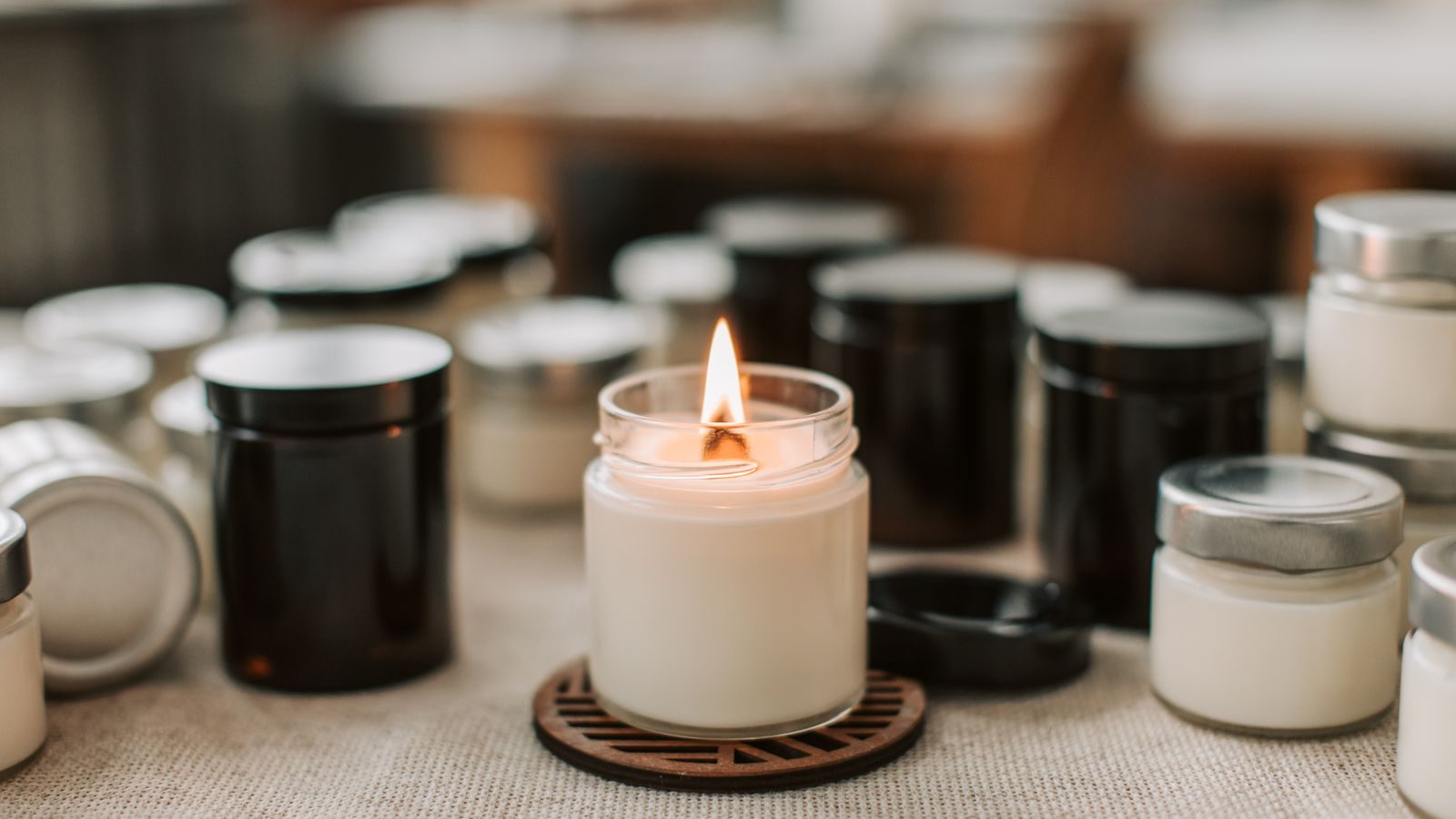
Wet spots and frosting are the two cosmetic defects that drive new soy makers to despair, usually unnecessarily. Neither is a safety issue. Neither affects burn quality. The candle is fine. The customer's perception is the problem.
Here's what each one actually is, the changes that minimise both, and where I stop chasing perfection and write a label note instead.
Wet spots: not actually wet
Wet spots are the clear, glassy patches you see when wax has pulled away from the inside of a jar. They look like water trapped against the glass. They're not. They're air gaps caused by the wax shrinking during cure faster than the glass it's sitting against.
The cause is almost always a cold jar at pour time. Hot wax hits cold glass, sets immediately at the contact surface, and then shrinks as it cools. The cold initial layer can't move with the shrinkage, so it lifts off in patches.
Fix: pre-warm jars to 40–50°C for 10 minutes before pouring. A domestic oven on its lowest setting works; a heat mat under a tray works; even a hair-dryer on warm sweeping across the inside of the jars for 30 seconds each helps. This single change eliminates the majority of wet spots.
Pouring on a draft-free bench at room temperature (about 20°C) is the second-biggest lever. A cold workshop in January will give you wet spots even with pre-warmed jars.
Frosting: soy doing what soy does
Frosting is the white, crystalline patches that appear on top of soy wax as it cools at uneven rates. It's a polymorphic crystallisation effect: soy crystals can pack in several different geometries, and the slower the cool, the larger and more uniform the crystals. Frosting is a small-crystal cosmetic, not a defect.
Fix: pour cooler (52–57°C instead of 65°C), pre-warm the jars as above, and let the candles cool slowly in a draft-free spot. Covering the curing rack with a clean towel slows the cool further and reduces frosting visibly.
Frosting will return on the second and third burn as the wax recrystallises. There's no permanent fix for that, only the upstream choice to use a frosting-resistant wax. Coconut blends frost much less. Apricot wax frosts almost not at all.
Bumpy or pitted tops
Bumpy tops are caused by stirring the wax too aggressively after adding fragrance (introducing air bubbles), pouring too cool (top sets before self-levelling), or pouring into jars that are too cold (rapid surface set traps texture).
Fix: stir gently for 2 minutes after fragrance addition, pour at the upper end of the recommended range, and warm the jars. If the top still sets bumpy, a 30-second pass with a hair-dryer on warm before the wax fully sets self-levels the surface.
Cracking
Cracks across the surface mean the candle cooled too fast at the top. Move the curing rack away from any draft (open windows, fans, air vents, even a busy doorway), and drop the pour temperature by 3–5°C.
When to stop chasing perfection
Pre-warm the jars, pour at the right temperature, cool slowly, and you'll eliminate the worst of it. You won't eliminate all of it. Soy frosts. That's chemistry, not failure.
What I do instead is print a short note on the bottom of the label: "This candle is made with natural soy wax. Frosting and wet spots are cosmetic features of soy and do not affect burn quality." Customers who don't know what frosting is take that as a sign of authenticity. Customers who do know what it is are reassured you're not selling them a defective candle.
Updated 25 June 2026. Fact-checked against BS EN 15493:2019.
Frequently asked
Updated 2026-05-14. Fact-checked against BS EN 15493:2019. Candles. Specification for fire safety.
The Maker's Codex, as a PDF
The full five-act manual. Bench setup, wick sizing, scent throw, pricing, compliance, scaling. Cited to EN 15493, ASTM, IFRA and CLP. We email your regional edition (metric or imperial, GBP, EUR, USD, CAD, AUD).
Best Wax for Candles: An Honest Maker's Guide (2026)
I've poured every common candle wax through the Bristol studio. Here's what soy, coconut, paraffin, beeswax, apricot and rapeseed actually feel like to work with, and which one fits the candle you want to sell.
How to Start a Candle Business: A Realistic 90-Day Plan
A working chandler's 90-day plan to go from first pour to first paid order. Kit budget, first 10 SKUs, batch costing, channel choice, and the compliance checklist that keeps you out of trouble.
Beeswax vs Soy Candles: A Real Comparison
Burn time, scent throw, environmental impact, and cost compared honestly. The right answer depends on what you're optimizing for.
How to Fix Candle Tunneling (and Stop It Coming Back)
Tunneling is a wick-and-first-burn problem, not a wax problem. Three rescue methods that work, plus the upstream fix so the next pour burns edge to edge.