Types of Candles You Can Make: Container, Pillar, Votive and More
Eight types of candle a home maker can make, compared: the wax, wick and holder each needs, how hard it is, and which one to start with. Includes votives and candle sand.
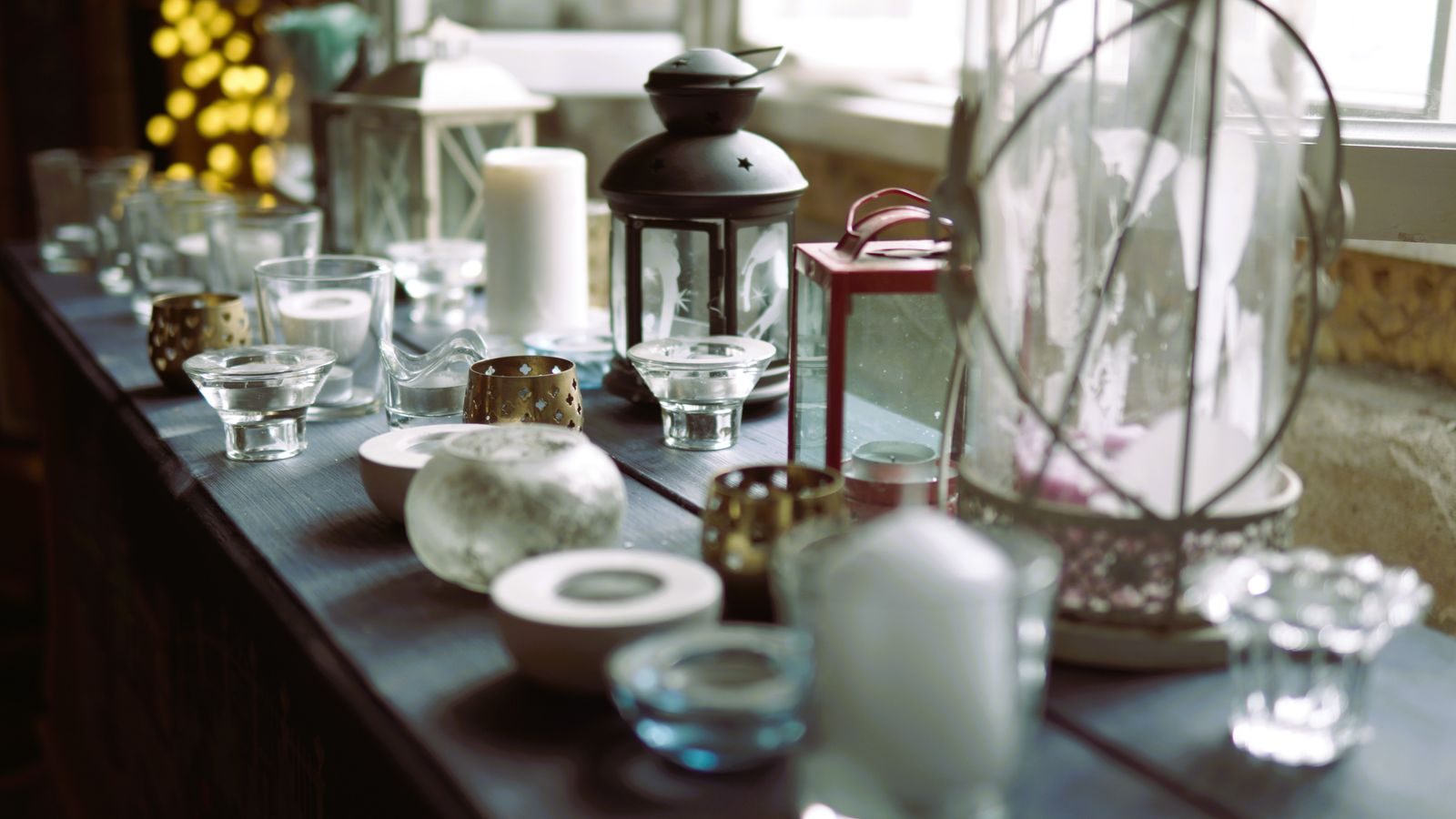
There are eight common types of candle you can make at home. They differ in the wax, the wick, what holds them, and how much can go wrong.
If you are starting out, make container candles first. The rest of this page shows what changes for each other type.
The types compared
| Type | Usual wax | Wick | Holder or mould | Difficulty |
|---|---|---|---|---|
| Container | Soy, coconut or paraffin container wax | Pre-tabbed CD, ECO or HTP | Glass jar or tin | Easiest |
| Pillar | Firmer pillar wax | Square braid | Metal, polycarbonate or silicone mould | Medium |
| Votive | Votive or pillar wax | Pre-tabbed votive wick | Votive mould, then a votive holder | Easy to medium |
| Tealight | Container or tealight wax | Pre-tabbed tealight wick | Aluminium or polycarbonate cup | Easy |
| Taper | Beeswax, or paraffin with stearin | Flat braid | Dipping vat or taper mould | Hardest |
| Wax melt | Soy or paraffin melt wax | None | Clamshell or silicone mould | Easiest |
| Candle sand | Granulated wax | Loose cotton wick | Any heat-safe bowl | No melting |
| Gel | Mineral oil gel | Wick made for gel | Thick glass | Medium, extra care |
Container candles
The wax is poured into the jar or tin it burns in, so it never has to stand up or release from a mould. That makes it the most forgiving type.
Soft waxes such as soy work well here. The seven-step guide walks through a first batch, and the supplies checklist lists what you need.
Pillar candles
Pillars stand on their own, so they need a firmer wax that shrinks away from the mould and releases cleanly. Most use a square braid wick.
Pillar wax shrinks as it cools, leaving a dip around the wick. You fill it with a second pour once the first has set. The Codex chapter on paraffin and pillars goes deeper.
Votive candles
A votive is a small candle poured in a votive mould, then burned in a holder. Votives melt completely as they burn, so they must always sit in a holder made for votives.
Votive wax is often the same as pillar wax. CandleScience pours votives at about 79°C, and the wax shrinks enough to need a second pour the next day.
Expect about eight votives from 454 g of wax. A typical votive burns for about 15 hours.
Tealights
Tealights are small, quick candles poured into aluminium or polycarbonate cups with pre-tabbed wicks. They are an easy way to test a fragrance before committing to a full jar.
Taper candles
Tapers are built up by dipping a wick into melted wax again and again, or poured in a tall taper mould. Getting an even, straight taper takes practice, which makes them the hardest type here.
Rolled beeswax tapers are the exception. You roll a sheet of beeswax tightly around a wick, with no melting at all, so children can help. An adult should supervise whenever they are lit.
Wax melts
Wax melts have no wick. They sit in a warmer that melts them to release the scent, so they are poured into simple clamshell or silicone moulds.
They are the quickest product to make, but selling them brings the same labelling questions as candles. The Codex wax melts chapter covers adding them to a range.
Candle sand
Candle sand, also sold as pearled or granulated wax, needs no melting. You pour the loose wax into a heat-safe bowl, push in a cotton wick and light it; only the wax next to the flame melts.
What it is made of varies by brand: many are paraffin, some are plant waxes. Suppliers suggest roughly 50–75 mm of width per wick. When a wick burns down, you replace it and keep the rest of the sand.
Gel candles
Gel candles are made from mineral oil thickened with a polymer, not wax. Candle gels are formulated with high flash points, around 232°C for Versagel C.
Gel takes less fragrance than wax: Versagel's grades are designed for 0 to 6%, depending on the grade. Suppliers ask for fragrance oils with a flashpoint of at least 77°C.
Use thick glass made for candles, and read the gel maker's safety bulletin before your first pour. Gel is where a beginner most needs to follow the instructions exactly.
Paraffin wax for candles
Paraffin is refined from petroleum and sold in grades for containers, pillars and votives, set mostly by melt point. Container paraffins such as IGI 6006 pour around 79°C and take up to 12% fragrance.
Pillar and votive paraffins are firmer: 4045, for example, melts at about 62°C. Paraffin cures in about 48 hours. The soy vs paraffin comparison covers how it differs from soy.
Which type should you start with?
Start with container candles in soy. They need the fewest tools, forgive the most mistakes, and teach you the temperatures every other type depends on.
If you want no heat at all, for a first try or with children, choose rolled beeswax sheets or candle sand.
Frequently asked
Updated 2026-11-26. Fact-checked against CandleScience: How to make votive candles.
The Maker's Codex, as a PDF
The full five-act manual. Bench setup, wick sizing, scent throw, pricing, compliance, scaling. Cited to EN 15493, ASTM, IFRA and CLP. We email your regional edition (metric or imperial, GBP, EUR, USD, CAD, AUD).
Best Wax for Candles: An Honest Maker's Guide (2026)
I've poured every common candle wax through the Bristol studio. Here's what soy, coconut, paraffin, beeswax, apricot and rapeseed actually feel like to work with, and which one fits the candle you want to sell.
How to Start a Candle Business: A Realistic 90-Day Plan
A working chandler's 90-day plan to go from first pour to first paid order. Kit budget, first 10 SKUs, batch costing, channel choice, and the compliance checklist that keeps you out of trouble.
Beeswax vs Soy Candles: A Real Comparison
Burn time, scent throw, environmental impact, and cost compared honestly. The right answer depends on what you're optimizing for.
How to Fix Candle Tunneling (and Stop It Coming Back)
Tunneling is a wick-and-first-burn problem, not a wax problem. Three rescue methods that work, plus the upstream fix so the next pour burns edge to edge.