Soy Wax Candles: How to Make Them Well
What soy wax is, the soy waxes makers actually use, the temperatures that matter, why soy frosts, how long a soy candle burns, and what soy does and doesn't do.
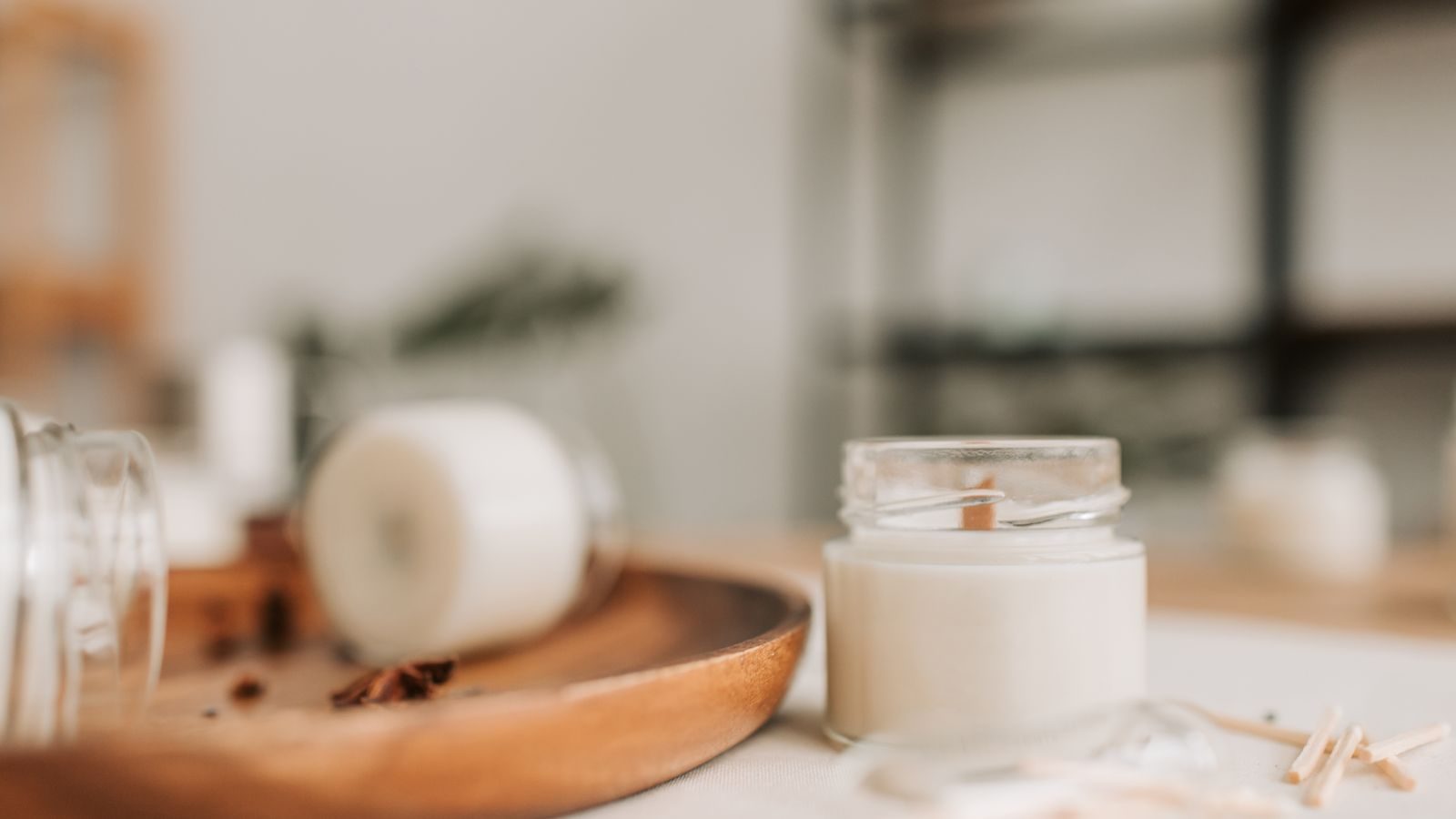
Soy wax candles are container candles made from hydrogenated soybean oil. They look creamy and opaque, take fragrance well, and need about two weeks to cure before they smell their best.
Soy is also where most new makers start. It is forgiving, widely sold and well documented, but it has quirks worth knowing before your first batch.
What soy wax is
Soy wax is soybean oil hydrogenated until it is solid at room temperature. Container grades such as Golden Wax 464 add a small soy-based additive that reduces frosting and helps the wax carry fragrance.
Most soy wax is made for containers. It is too soft to stand on its own, so it is poured into jars and tins. Firmer soy blends are sold separately for pillars and votives.
The soy waxes you'll see most
Golden Wax 464. The best-known container soy, made from US-grown soybeans. It melts at about 45–48°C, and CandleScience recommends CD and ECO wicks for it.
Golden Wax lists a fragrance load of 5 to 10% for 464, and its handling notes recommend 7 to 9%. The fragrance oil's own IFRA limit may be lower, so check its certificate.
Golden Wax 444. A firmer container soy with a higher melt point. It holds its shape better in warm weather, which matters if you ship candles in summer.
KeraSoy 4130. The usual choice in the UK and EU. It is not a straight swap for 464: it pours hotter, at 60–70°C, and suits 4Candles CL or TB wicks.
Working temperatures
Soy is the most temperature-sensitive of the common waxes. These figures come from the pour temperature guide.
| Step | Golden Wax 464 | KeraSoy 4130 |
|---|---|---|
| Melt to | 80–85°C | 80–85°C |
| Add fragrance at | 80–85°C | 75–80°C |
| Pour at | 55–65°C | 60–70°C |
Warm the jars to 40–50°C before you pour. Warm glass lets you pour at the cool end of the range and still get a smooth top.
Stir the fragrance in gently for two full minutes. Check the oil's flashpoint on its safety data sheet first, and keep the wax at least 5°C below it.
Frosting and wet spots
White, crystalline patches on the top or sides are called frosting or bloom. They are a natural feature of soy wax and don't change how the candle burns.
Warm jars and a cooler pour reduce frosting, and so does a coconut soy blend. Wet spots, where the wax pulls away from the glass, are cosmetic too.
The wet spots and frosting guide covers both, and the frosting fix walks through the causes one at a time.
Wicks for soy
Soy melts into a wide, slow pool, so it needs wicks built for it. CD and ECO wicks are the usual pairing for 464, and 4Candles CL and TB wicks for KeraSoy 4130.
Size the wick to the inside diameter of the jar with the wick size chart, then test-burn. A soy candle that tunnels needs a bigger wick; one that smokes needs a smaller one.
How long soy candles burn
Expect roughly 28 to 47 hours from a 200 g soy candle. The Burn Time Calculator's model gives about 28 hours in a 70 mm jar with a CD wick at 8% fragrance; the side-by-side burn in the soy vs paraffin comparison ran 47. Wick size, draughts and trimming decide where a given candle lands.
Let the first burn run until the melt pool reaches the edge of the jar, usually two hours or more. Trim the wick to about 6 mm before every later burn.
Curing
Soy needs 10 to 14 days before it throws its full scent. A soy candle lit on day one smells weaker than the same candle on day fourteen. The cure time guide explains why.
What soy does and doesn't do
Soy wax comes from soybeans, where paraffin is refined from petroleum. That is a real difference in what the candle is made of.
Soot is a different matter. It comes mainly from the wick: an oversized or untrimmed wick smokes in any wax, and a correctly sized one keeps soot low in any wax. The soy vs paraffin comparison goes through the evidence.
Soy's weak point is heat. CandleScience notes that Golden Wax 464 can be too soft for summer shipping, which is why some makers switch to a firmer blend such as 444 for warm months.
Soy compared with other waxes
- Paraffin gives a stronger throw and cures in about 48 hours. See soy vs paraffin.
- Coconut soy blends set more evenly, frost much less and pour a little cooler. See the pour temperature guide.
- Beeswax smells faintly of honey and takes very little added fragrance. See beeswax vs soy.
To make your first soy candle, follow the seven-step guide.
Frequently asked
Updated 2026-11-26. Fact-checked against CandleScience: Golden Brands 464 Soy Wax product data.
The Maker's Codex, as a PDF
The full five-act manual. Bench setup, wick sizing, scent throw, pricing, compliance, scaling. Cited to EN 15493, ASTM, IFRA and CLP. We email your regional edition (metric or imperial, GBP, EUR, USD, CAD, AUD).
Best Wax for Candles: An Honest Maker's Guide (2026)
I've poured every common candle wax through the Bristol studio. Here's what soy, coconut, paraffin, beeswax, apricot and rapeseed actually feel like to work with, and which one fits the candle you want to sell.
How to Start a Candle Business: A Realistic 90-Day Plan
A working chandler's 90-day plan to go from first pour to first paid order. Kit budget, first 10 SKUs, batch costing, channel choice, and the compliance checklist that keeps you out of trouble.
Beeswax vs Soy Candles: A Real Comparison
Burn time, scent throw, environmental impact, and cost compared honestly. The right answer depends on what you're optimizing for.
How to Fix Candle Tunneling (and Stop It Coming Back)
Tunneling is a wick-and-first-burn problem, not a wax problem. Three rescue methods that work, plus the upstream fix so the next pour burns edge to edge.